Good Things Come to Those Who Bait
A Designer’s Take on the Fishing Hook of Positivity
As a designer who works with embroidery files daily, I often find myself evaluating designs not just for their aesthetic appeal, but for their practicality in real-world applications. Good Things Come to Those Who Bait is one such design that caught my eye—not just for its clever phrase, but for how it balances humor and craftsmanship in a way that feels both authentic and versatile.
The First Impression: A Playful Blend of Nostalgia and Modern Design
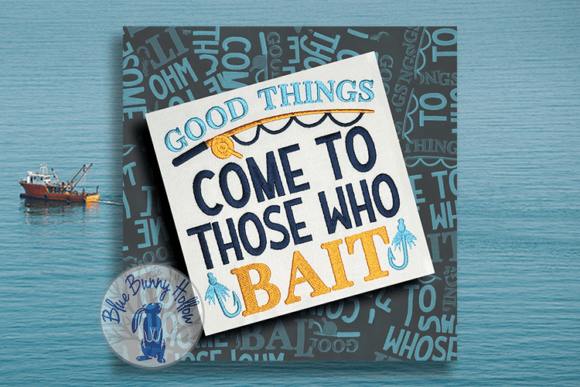
At first glance, Good Things Come to Those Who Bait evokes a sense of nostalgia, reminiscent of old fishing gear and the kind of wit you’d find in a tackle shop. The combination of a fishing rod and hooks with the phrase creates a visual narrative that’s immediately relatable to anyone who’s ever cast a line. The layout is clean, with a subtle balance between the graphic elements and the text, making it feel intentional rather than cluttered.
The use of satin stitch and fill stitch adds texture without overwhelming the design. The hooks are rendered with enough detail to be recognizable but not so intricate that they become distracting. This makes the design ideal for a variety of projects where clarity and simplicity are key.
Real-World Use Case: Custom Apparel with a Twist
I recently considered using Good Things Come to Those Who Bait for a custom sweatshirt design for a local fishing club. The idea was to create a piece that would resonate with members while also being wearable in everyday life. The design’s playful nature made it a natural fit for casual wear, and the phrase itself offered a lighthearted message that could spark conversation.
When testing the design on a scrap piece of fabric, I noticed that the contrast between the thread color and the fabric background played a crucial role in visibility. It’s important to consider thread colors and fabric texture when selecting a design for a project. In this case, a light-colored thread on a dark fabric would have made the design less legible, while a bold thread on a white or light gray fabric brought out the details beautifully.
Where to Use It Safely: Practical Considerations
While Good Things Come to Those Who Bait is adaptable, there are certain scenarios where it may require extra care. For instance, using it on small hoop sizes could lead to a loss of detail, especially in the hook shapes and lettering. Similarly, on textured fabrics like denim or canvas, the design might appear slightly distorted due to the fabric’s surface.
Another consideration is dark fabric. While the design can work well on darker backgrounds, it’s advisable to test it in a black and white mockup to ensure that the lines and shapes remain clear. If the design is intended for commercial embroidery, checking the stitch density and ensuring that the file is optimized for the intended machine is essential.
For curved surfaces like caps or hats, the design may need additional support from a stabilizer to prevent puckering or distortion. This is particularly important if the design includes detailed corners or intricate elements like the hooks.
Design Impact: Visual Appeal and Customer Trust
Good Things Come to Those Who Bait has the potential to elevate a product’s visual appeal significantly. Its blend of humor and craftsmanship makes it memorable, which is crucial for personalized gifts and custom apparel. When customers see a design that’s both functional and fun, it enhances the perceived value of the product.
From a brand consistency standpoint, the design fits well within a craft business or Etsy seller portfolio. It’s versatile enough to be used across multiple product types—tote bag design, sweatshirt embroidery, holiday embroidery, or even nursery decor—making it a valuable asset for those looking to expand their offerings.
Designer Notes: Tips for Success
- Test on scrap fabric: Always try the design on a small piece of fabric before committing to a full project.
- Check thread color contrast: Ensure the thread complements the fabric and maintains clarity.
- Review stitch density: Confirm that the design stitches evenly without overcrowding or sparse areas.
- Confirm hoop size: Choose a hoop that accommodates the design’s scale without distorting it.
- Inspect small details: Pay attention to the hooks and lettering to ensure they’re crisp and well-defined.
- Use proper stabilizer: Especially on stretchy or textured fabrics, a stabilizer can make all the difference.
- Compare light and dark backgrounds: Test the design on different fabric types to gauge its adaptability.
- Confirm licensing: If planning to sell finished products or digital files, ensure you have the appropriate rights.
Final Thoughts: A Design That Works
Good Things Come to Those Who Bait is more than just an embroidery design—it’s a statement. Whether you’re creating a handmade product, a personalized gift, or a commercial embroidery project, this design offers a unique blend of functionality and charm. With careful consideration of fabric type, thread color, and application method, it can become a standout piece in any designer’s toolkit.